What to Plan Before Building a Backyard Cabana in Las Vegas
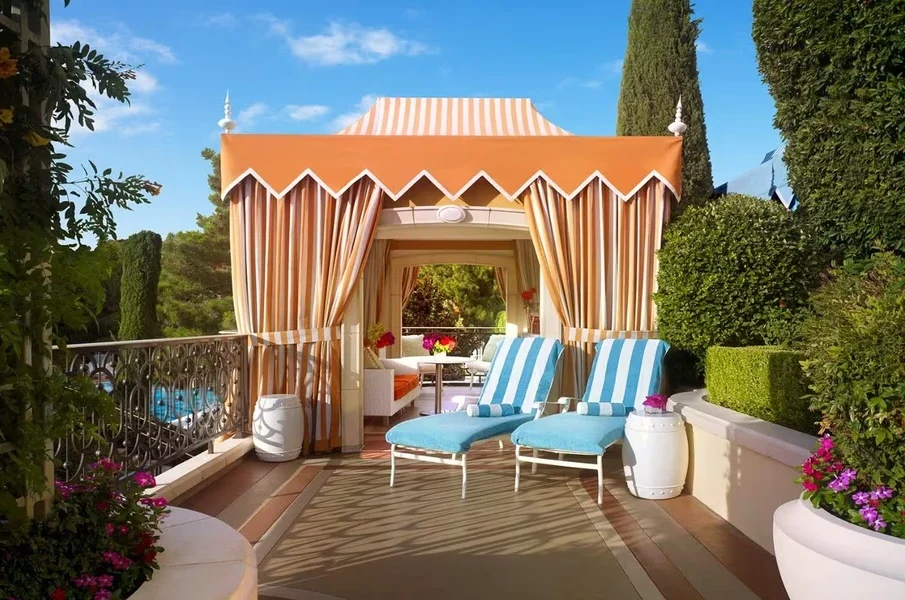
Skipping the planning phase on a backyard cabana costs more than you think. Not a little more. A lot more. Homeowners who jump straight to pouring concrete routinely end up with structures that bake their guests in July, clash with HOA rules, or run out of outlets the first weekend they host. Las Vegas is not a forgiving climate for an afterthought build. Do it right and you get an outdoor room you will actually use 300 days a year. Rush it and you get an expensive shed nobody wants to sit in. Here is what deserves your attention before a single shovel hits the ground.
Table of Contents
Understand What the Desert Climate Actually Demands
Most cabana planning guides talk about aesthetics first. In Las Vegas, the climate has to come first or nothing else matters. According to the National Weather Service’s 1991-2020 climate normals for Las Vegas, the average July high sits at 104.5°F and August is not far behind at 102.8°F. That is not a statistic you can decorate around. It is a structural constraint.
Your cabana roof needs to do serious work. A pergola with 40 percent coverage looks beautiful in a showroom and fails completely poolside at 2 p.m. in August. A solid insulated roof panel or a thermally broken metal system with a ceiling fan rough-in is a much smarter starting point. Shade is the primary amenity, not an add-on.
Orientation matters just as much as materials. A cabana that opens to the west gives your guests a direct sightline into the setting sun during the exact hours they want to be outside. Rotate it south or southeast and you gain shade in the afternoon when temperatures peak. Walk your yard at 3 p.m. before you finalize any layout with a contractor.
Map Out Every Function Before You Pick a Size
The number one mistake homeowners make is guessing on square footage. They pick a size based on budget and then spend money later adding the things they forgot. Start with function and let the footprint follow.
Ask yourself four questions. First, are you entertaining groups or retreating solo? A 10 x 12 structure works beautifully as a personal lounge and falls flat the moment you invite eight people. Second, do you want a wet bar or a full outdoor kitchen? The answer changes your utility rough-in requirements completely. Third, do you need a bathroom or changing room? If your pool is more than 50 feet from the house, the answer is almost certainly yes. Fourth, will anyone sleep out here? Guest suite conversions are one of the most popular secondary uses for Las Vegas cabanas, and planning for that possibility from the start costs almost nothing extra.
Once you have the function list, build your size requirements from the inside out. That process almost always results in a larger structure than the homeowner originally budgeted, and it is far cheaper to upsize during design than to expand after construction.
Know Your Permits, HOA Rules, and Setback Requirements
Clark County and the City of Las Vegas both require building permits for permanent outdoor structures above a certain square footage. The thresholds differ by jurisdiction. If your property falls under an HOA, add a separate approval layer on top of municipal permits. Some HOAs in Summerlin and Henderson have architectural review boards that require scaled drawings, material samples, and color palettes before they will sign off.
Setback requirements determine how close your structure can sit to the property line and to the pool itself. These vary by lot size and zoning classification. Ignoring them is not an option. A completed cabana built too close to the fence line can be ordered demolished, and no contractor can protect you from that outcome after the fact. Pull your property survey, contact your local planning department, and confirm your setbacks before you design anything.
A reputable builder will handle permit acquisition as part of their scope. If a contractor tells you permits are unnecessary for your project, that is a red flag serious enough to walk away from.
Choose Your Materials for Heat, Durability, and Upkeep
Wood framing in a Las Vegas climate is not wrong, but it demands more maintenance than most homeowners expect. Composite decking, powder-coated steel framing, and fiber cement panels all perform better in sustained desert heat with less annual upkeep. The UV index in Las Vegas is extreme, and materials that look great in a showroom can fade, warp, or crack within two seasons if they are not specified for desert exposure.
Roofing material is equally consequential. Standing seam metal reflects radiant heat better than most alternatives. If the cabana sits directly beside the pool, factor in chlorine and humidity off the water surface. Not all materials handle that combination well. Stainless fasteners, sealed concrete, and moisture-resistant insulation are worth specifying even in a dry climate because pool environments create their own microclimate.
The Six-Step Pre-Build Checklist
- Function audit: List every activity you want to do in the space. Rank them. Cut nothing yet.
- Site orientation walk: Observe your yard at 9 a.m., noon, and 3 p.m. Note where shade falls and where sun bakes.
- Utility mapping: Identify where electrical panels, water lines, and gas lines run. Rough-in costs are far lower during initial construction than after.
- Permit and HOA research: Contact your municipality’s planning department and your HOA in writing. Get rules in writing.
- Material specification: Confirm every material is rated for sustained temperatures above 100°F and UV exposure.
- Contractor vetting: Check Nevada contractor license status through the Nevada State Contractors Board before signing anything.
Why Professional Design Makes the Difference in This Market
The data backs up what experienced homeowners already know. The 2026 Houzz U.S. Outdoor Trends Study found that 71% of homeowners hired at least one contractor for outdoor renovations, up from 65% the previous year, as project complexity and ambition continue to grow. That shift reflects a broader recognition that outdoor builds, especially in high-demand climates like Las Vegas, benefit enormously from professional design coordination.
A Las Vegas backyard specialist understands the local permitting calendar, seasonal material availability, and the specific structural tolerances that desert conditions demand. For something like poolside cabana construction in Las Vegas projects, working with a contractor who has completed dozens of builds in the same climate means your design accounts for that 104°F July high before it is drafted, not after you are sitting inside wondering why the space is unusable.
“People used to call about a basic patio slab or a driveway. Now they come in with a whole vision: stamped concrete patio with a fire pit, a pool deck with a specific finish, an outdoor kitchen base that has to connect to everything.” – Pedro Lemus, owner of Lemus Concrete, speaking to Holy City Sinner about how project ambition has shifted in recent years.
That ambition is the right instinct. The problem is ambition without planning. A well-scoped build brief handed to the right contractor in January gives you a finished cabana by April, before the desert heat arrives. A rushed brief handed over in May gives you a construction zone during the months you most want to use the space.
One Scenario Worth Running Through
Picture a homeowner in Henderson with a 60-foot pool, a western fence line 12 feet from the pool edge, and a tight HOA with a 90-day architectural review window. They want a 20 x 16 structure with a bar, a bathroom, and covered seating for ten. If they start the HOA submission in October, clear permits by December, and break ground in January, the build finishes in early March. They use the space all spring. If they start the conversation in May, the HOA review pushes the permit timeline into late summer, construction runs through fall, and they have essentially skipped their best outdoor season entirely. The cabana design did not change. The timing did. That is a planning decision, not a construction one.
Start the planning process earlier than feels necessary. Your backyard will thank you before summer even arrives.