How to Tell When a Roof Has Reached the End of Its Life
I spent one February afternoon holding a blue tarp down with two coolers while a neighbor fought with a roofing crew’s answering service. Her ceiling had been dripping into a mixing bowl since Tuesday. By the time anyone got up on her house, the decking under the drip had gone soft, and a repair that would have cost her a few hundred dollars turned into a full tear off with new plywood underneath.
That is the whole problem with roofs. They fail slowly, then all at once, and the bill triples somewhere in between. So here is the test I wish someone had handed her two winters earlier: a six point walk around your own house, from the ground, that takes about twenty minutes and tells you whether you’re in repair territory or replacement territory. No ladder required for most of it.
Table of Contents
Six Things You Can Check From the Ground
You don’t need to climb anything. Bring binoculars if your roof is steep, and go out after a rain so you know what you’re looking at.
- Granules in the gutters and at the downspout splash pads. Those little gravel looking bits are the top layer of your shingles washing away. Some is normal on an older roof. Piles of it mean the shingle is down to its backing.
- Curling or cupping shingle edges. Look at the rake edge and along the ridge line. If the tabs are lifting into little waves, wind and sun have done their work.
- Bald, shiny patches. A shingle that reflects light instead of absorbing it has lost its protective surface. That spot is now a sponge.
- Sagging along the roof plane. Stand at the end of the driveway and sight along the ridge. A dip or a wave is a structural signal, not a cosmetic one.
- Rust streaks, popped nails, or dark staining on the sheathing lines. Popped nail heads mean the deck has been moving. Dark streaks near the chimney or valleys usually mean water is already getting in.
- Daylight in the attic. This one needs a flashlight and a few minutes inside. Go up during the day, kill the lights, and look at the underside of the roof. Pinpricks of light are bigger problems than they look.
Score yourself honestly. One item on that list is a repair. Three or more, on a roof past its expected service life, and you’re shopping for a replacement whether you like it or not.
The Age Question Nobody Answers Straight
Homeowners ask me the same thing first: how long should this roof have lasted? The honest answer is that asphalt shingles have a published service life and real world performance, and those two things rarely match. The National Weather Service, which tracks the freeze thaw cycles and hail events that push roofs around here, can tell you more about what your specific area has been through than any general lifespan chart can.
What matters more than the calendar is the exposure history of your particular roof face. A south facing plane that bakes all summer ages years ahead of the shaded north side of the same house. So a roof that’s supposedly eleven years old might be fifteen years old on one side and eight on the other. That’s why a single age number from a salesperson is close to useless.
Here’s my opinion, and I’ll own it: if your roof is past roughly two thirds of its rated life and it’s showing two items from the list above, don’t spend money patching it. You’re paying interest on a loan you’re going to take out anyway.
Repair or Replace? A Decision Rule You Can Actually Use
Most people get talked into one or the other. There’s a better way to think about it.
Figure out the age of the roof as a percentage of its expected life, then look at where the damage sits.
| Situation | What I’d do |
|---|---|
| Under 40% of life, damage in one small area | Repair it. Patch and move on. |
| Under 40% of life, damage is storm related | Repair, and check whether your policy covers it before you sign anything. |
| 40 to 70% of life, one isolated leak | Repair, but get it inspected yearly from here on. |
| 40 to 70% of life, damage across multiple slopes | Get replacement quotes now. Stop repairing. |
| Past 70% of life, any leak at all | Replace. The next leak is hiding behind this one. |
The trap is the third and fourth rows. People sit in them for years, paying for repair after repair, because each individual patch feels cheaper than a replacement. Add those invoices up someday.
One more rule I’d carve into a wall: never put a new layer of shingles over a failing one. It hides the decking, it adds weight you didn’t need, and whoever buys your house will find out. Several states have moved away from allowing it at all, and the U.S. Department of Housing and Urban Development maintains the property standards that shape how homes are evaluated for federally backed mortgages, which is a decent window into why layered roofs cause trouble at resale.
What the Inspection Should Actually Cover
If you’re going to let someone on your roof, know what a real inspection includes. If a company won’t put any of this in writing, they’re guessing.
- Shingle condition on every plane, not just the front.
- Flashing at the chimney, vents, and sidewalls.
- Valleys, where two roof planes meet and water moves fastest.
- Decking, checked by feel from above and from the attic below.
- Attic ventilation and any signs of trapped moisture.
- Gutters and downspouts, since a bad drainage path damages the roof edge and your foundation.
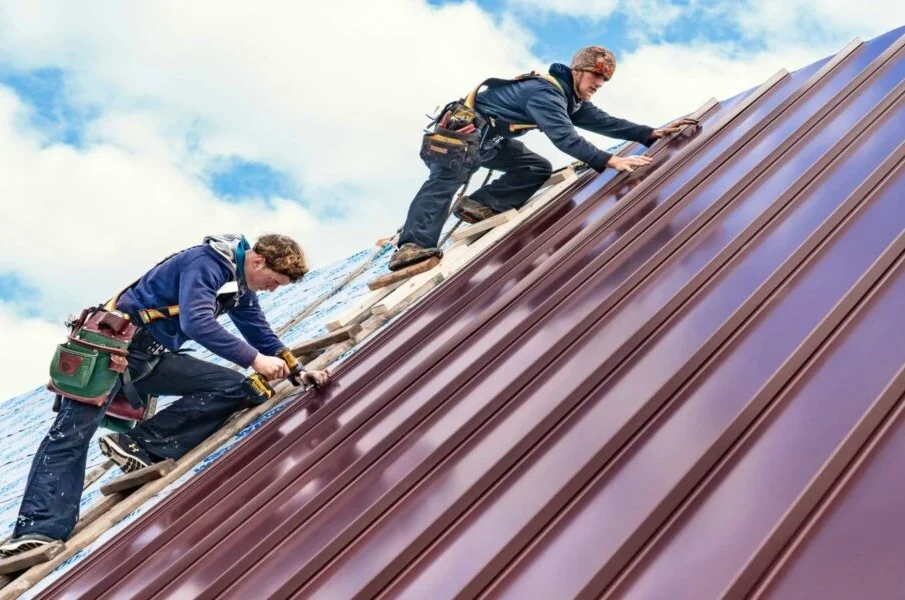
Ask for photos. Anyone doing this work honestly already takes them, and photos are the difference between a diagnosis and a sales pitch. Fall protection matters too, and the Occupational Safety and Health Administration sets the standards that a legitimate crew should be following while they’re up there. If nobody on site is tied off, that tells you something about how the rest of the job will go.
Set the ladder down for a second and think about timing as well. Crews book out fastest right after a big storm, and material lead times stretch in spring. If your inspection lands in a slow month, you have more room to ask questions and compare.
Timing the Job Without Wasting Money
Two practical moves. First, schedule the work before the leak starts, not after, because emergency pricing exists for a reason. Second, ask what’s included in the quote and what isn’t: tear off, decking, flashing, underlayment, disposal, permits. A low number with half those items missing isn’t a bargain.
And if you’ve already decided the roof is done, price it properly rather than jumping at the first card that lands in your mailbox. Homeowners around here are often comparing Roof replacement services in St. Louis on price alone when the real difference between two bids is almost always the decking allowance and the flashing detail, which is exactly where a cheap job shows its seams three years later.
When to Stop Reading and Call Someone
Water in the house is the line. Staining on a ceiling, a bulging patch of drywall, a drip you can hear at night: those aren’t maintenance items, they’re active losses, and every day you wait the repair gets bigger. Go check your attic the next time it rains hard. That flashlight trip takes five minutes and it’ll tell you more than any chart on the internet, including this one. What did you find up there?

I am Daisy Bell and a pro-level blogger with years of experience in writing for multiple industries. I have extensive knowledge of Food, Fitness, Healthcare, business, fashion, and many other popular niches. I have post graduated in arts and have keen interest in traveling.